


National Society: Vanuatu Red Cross Society (VRCS)
Dates of implementation: CBS was launched in August 2025, ongoing with dedicated funding until June 2027.
Implementation areas:
- Shefa Province, 70 villages
- Sanma Province, 45 villages
Diseases/health events monitored:
- Watery diarrhoea
- Severe respiratory infections/ influenza-like illness (ILI)
- Skin infections – scabies
- Leptospirosis
- Yaws skin disease
- Scabies skin disease
- Ciguatera fish poisoning
- Cluster of unusual illnesses or deaths in people
Context: Preparedness and post-disaster recovery contexts. The objective of this program is to strengthen linkages between communities and the formal health system and improve prevention, detection and control of communicable disease threats.
Project/programme/emergency responses that CBS is or has been used for: This program is ongoing as a preparedness initiative, and has mobilized in emergency response and recovery to the 7.3 magnitude earthquake which struck Port Vila on 17th December 2024.
Data collection system: Nyss
Partners:
- Vanuatu Red Cross Society
- Australian Red Cross Society
- Ministry of Health - Surveillance, Research, and Emergency Response Unit
- Ministry of Agriculture, Livestock, Forestry, Fisheries and Biosecurity (MALFFB).
- Water Management Authority
- Sanma and Shefa - Provincial Government, Area Councils, Area Administrators
Donors: Australian Government - Department of Foreign Affairs and Trade (DFAT)
Description of Activities:
The Vanuatu Red Cross Society (VRCS), in partnership with Australian Red Cross, is implementing community-based surveillance (CBS) as part of the SECURE Pacific Program — a three-year initiative (2024–2027) aimed at strengthening community engagement and health preparedness in Vanuatu. CBS activities are currently underway in Efate and will expand across 115 communities in Shefa and Sanma provinces in collaboration with Government ‘One Health’ departments at both Provincial and National levels.
CBS is embedded within broader efforts to prevent and control communicable diseases through increased health literacy, behaviour change, vector control, vaccine risk communication, and inclusive outbreak response. VRCS volunteers deliver community-based health awareness sessions on priority risks such as leptospirosis, diarrhoea, influenza, skin infections and malnutrition. Activities include live demonstrations, games, community discussions and distribution of visual aids to raise awareness and strengthen community engagement — all delivered in local language and tailored to each community's needs.
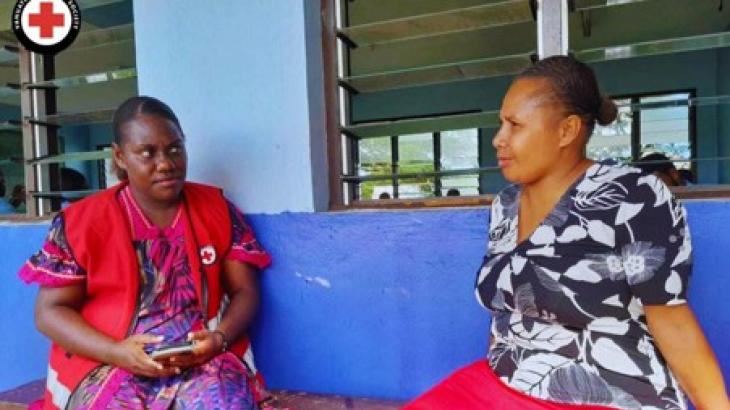
Volunteers and Team Leaders are trusted and recognized by their communities and send CBS alerts by simple numerical SMSs when they encounter people with illnesses that match the signs of serious outbreak-prone diseases. This data is processed in real-time using the Nyss® software platform, rapid notifications are sent to health services, and volunteers receive automatic replies reminding them of disease prevention and control information.
The program places communities at its centre, with training and knowledge-building directed at local community members, leaders, shop keepers and volunteers.
Related stories and case studies: